
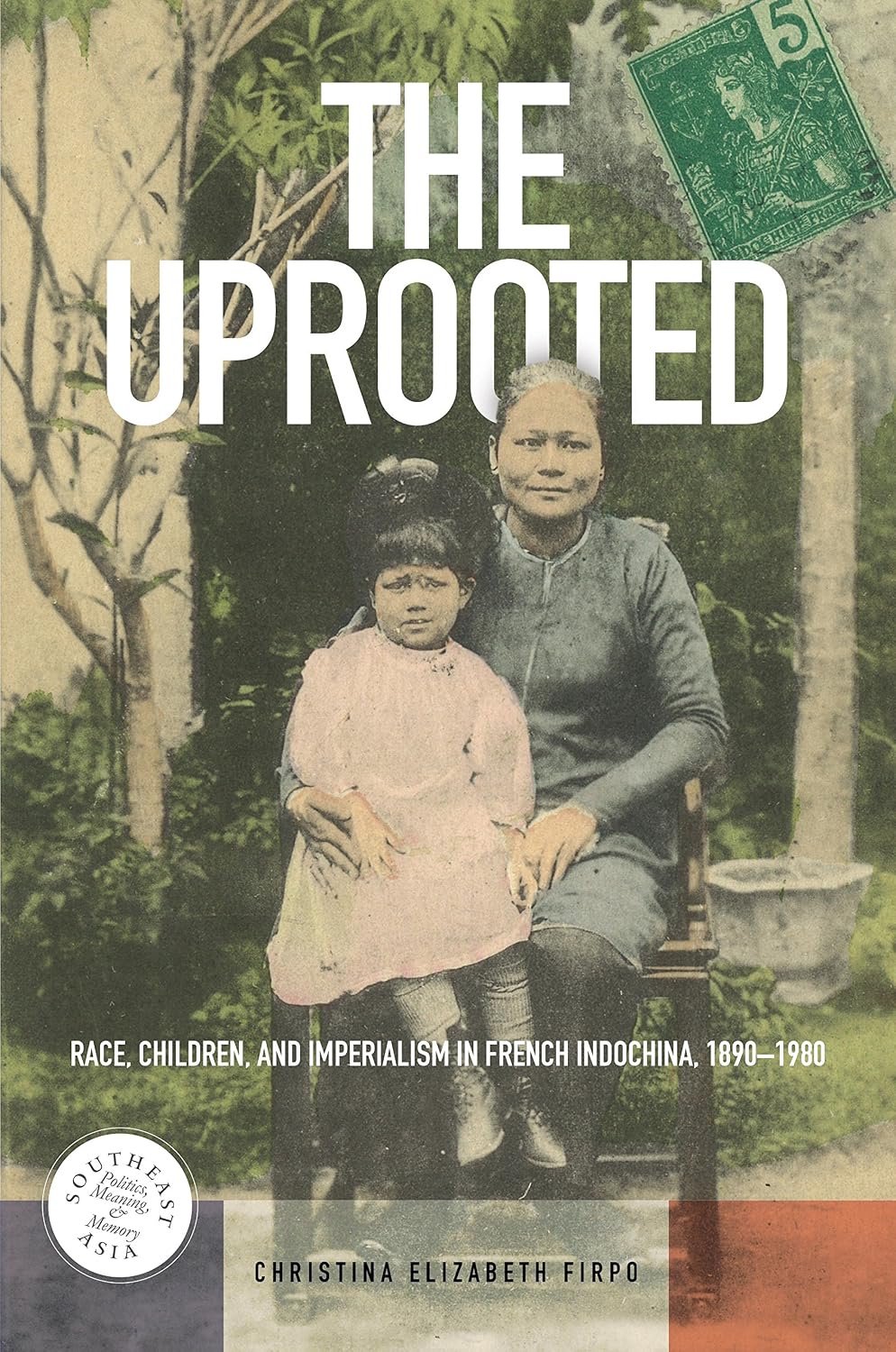
The Uprooted: Race, Children, and Imperialism in French Indochina, 1890–1980 (Southeast Asia: Politics, Meaning, and Memory Book 30)
Product details
| Management number | 233433477 | Release Date | 2026/06/27 | List Price | US$9.76 | Model Number | 233433477 | ||
|---|---|---|---|---|---|---|---|---|---|
| Category | |||||||||
For over a century French officials in Indochina systematically uprooted métis children—those born of Southeast Asian mothers and white, African, or Indian fathers—from their homes. In many cases, and for a wide range of reasons—death, divorce, the end of a romance, a return to France, or because the birth was the result of rape—the father had left the child in the mother's care. Although the program succeeded in rescuing homeless children from life on the streets, for those in their mothers' care it was disastrous. Citing an 1889 French law and claiming that raising children in the Southeast Asian cultural milieu was tantamount to abandonment, colonial officials sought permanent, "protective" custody of the children, placing them in state-run orphanages or educational institutions to be transformed into "little Frenchmen."The Uprooted offers an in-depth investigation of the colony's child-removal program: the motivations behind it, reception of it, and resistance to it. Métis children, Eurasians in particular, were seen as a threat on multiple fronts—colonial security, white French dominance, and the colonial gender order. Officials feared that abandoned métis might become paupers or prostitutes, thereby undermining white prestige. Métis were considered particularly vulnerable to the lure of anticolonialist movements—their ambiguous racial identity and outsider status, it was thought, might lead them to rebellion. Métischildren who could pass for white also played a key role in French plans to augment their own declining numbers and reproduce the French race, nation, and, after World War II, empire. French child welfare organizations continued to work in Vietnam well beyond independence, until 1975. The story of the métis children they sought to help highlights the importance—and vulnerability—of indigenous mothers and children to the colonial project. Part of a larger historical trend, the Indochina case shows striking parallels to that of Australia's "Stolen Generation" and the Indian and First Nations boarding schools in the United States and Canada. This poignant and little known story will be of interest to scholars of French and Southeast Asian studies, colonialism, gender studies, and the historiography of the family. Read more
| ASIN | B01DZ6P1MW |
|---|---|
| XRay | Not Enabled |
| ISBN13 | 978-0824858100 |
| Language | English |
| File size | 15.7 MB |
| Page Flip | Enabled |
| Publisher | University of Hawaii Press |
| Word Wise | Not Enabled |
| Print length | 279 pages |
| Accessibility | Learn more |
| Screen Reader | Supported |
| Part of series | Southeast Asia: Politics, Meaning, and Memory |
| Publication date | January 31, 2016 |
| Enhanced typesetting | Enabled |
Bestseller ranking
Civil Rights Law Books


Customers who viewed this product also viewed
Vietnam


Correction of product information
If you notice any omissions or errors in the product information on this page, please use the correction request form below.
Correction Request Form